Prices at the loading dock
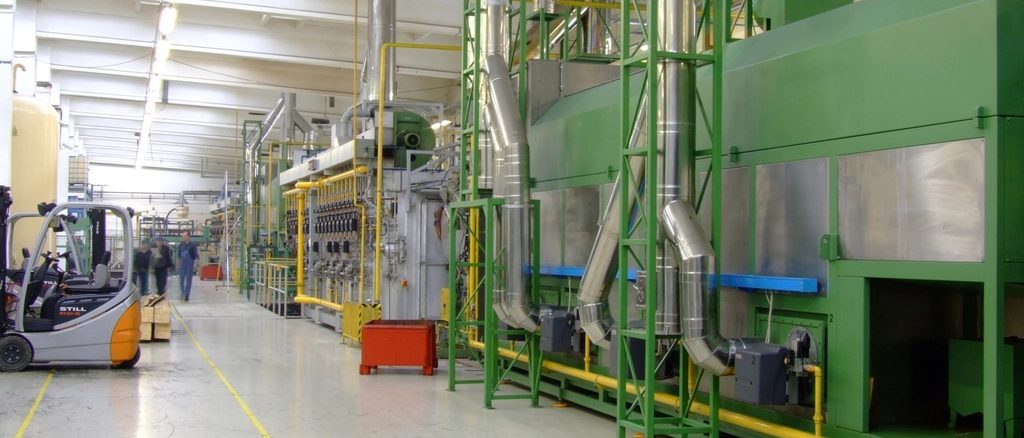
Before a price reaches a shelf it shows up at the loading dock. Wholesale prices are up 12.8% from a year ago (October 2026), the steepest 12-month rise since September 2022.
Consumer prices over the same year are up 4.1%. The two indexes cover different baskets of goods, so the gap is not a markup. It does show costs rising faster upstream than prices at the register.
This is a national index of what producers are paid. It is not a forecast of shelf prices.
What the registers say
The clearest local signal this month is at the register. The state paid Wichita Falls $4.66 million in sales tax in November, 17.6% more than last November. It is the largest November payment in the data, which goes back to 2013.
One month can mislead, because the payment follows the shopping by weeks and jumps around. The year so far is the steadier read: $43.4 million, 12.5% more than at this point last year.
Prices nationally rose 4.1% over the year, so part of any rise in sales tax is the same goods costing more rather than more goods being bought. The figures cannot separate the two.
Cost of money
The prime rate is 7.00% and the Federal Reserve's rate averaged 3.88% in October 2026. The 10-year Treasury rate is 5.10%, little changed over the past four weeks. The 10-year rate is 0.27 points above the 2-year rate.
Customers
The state paid Wichita Falls $4.66 million in sales tax in November, 17.6% more than the $3.96 million paid in November 2025. For the year so far the city has received $43.4 million, 12.5% more than at the same point last year. Sales tax is the closest monthly reading of spending at registers in town; the payment trails the sales themselves.
Nationally, spending at stores and restaurants was $745.0bn in September 2026, up 6.3% from a year ago. The consumer mood index is 48.1, down 2.8% over the past three months. 2.85% of credit card balances at banks are behind on payments (Apr-Jun 2026).
Moving goods
Diesel averaged $5.74 a gallon across the Gulf Coast region in the week of Nov 9, $2.37 more than a year ago and down 7 cents over the past four weeks. Long-haul truckload prices are up 24.9% from a year ago (October 2026).
By the Cass Freight Index, shippers' freight bills are up 26.5% from a year ago while the number of shipments is up 5.9% (October 2026; source: Cass Information Systems). Truck tonnage is down 1.6% from a year ago.
Stock and orders
American businesses held 1.33 months of sales in inventory in August 2026, against 1.40 a year earlier. New orders at factories were $677.2bn in September 2026, up 10.5% from a year ago.
The Dallas Fed's survey of Texas manufacturers read 13.4 in October 2026 (above zero means more said business improved than said it worsened); a year earlier it was -4.8. In the same survey the delivery-times index was 7.3 and the finished-goods inventories index was -10.9 (above zero means more firms reported an increase).
Hiring
4.0% of Wichita County's workforce was out of work in September 2026, the same as a year earlier. 54,870 residents had jobs, 641 fewer than a year before. Texas unemployment was 4.4% (September 2026). In Texas over the year to September 2026, professional and business services grew fastest (+3.3%) and information shrank fastest (-3.9%).
Nationally, average hourly pay is up 3.1% from a year ago. Workers quit at a rate of 2.1% of all jobs in September 2026, up 0.10 points over the past three months; employers hired at 3.4%.
AI in business
57% of businesses in Ramp's national sample paid for an AI tool in October 2026, up from 44% a year earlier. Among small businesses it was 51%; among large ones, 67%. By industry the share runs from 80% in information to 35% in hotels and restaurants.
This counts businesses that run their cards and bills through Ramp and made a payment to an AI company in the month. It is not a survey of all businesses, and it shows who is paying, not what the tools are doing. Source: Ramp AI Index, retrieved from FRED.
Figures that move first
- New unemployment claims: 200,000 claims (week of Nov 7), little changed over the past four weeks. The earliest weekly count of people losing jobs.
- Factory new orders: $677.2bn (September 2026), up 3.0% over the past three months. Orders are placed before goods are made and shipped.
- Heavy truck sales: 461,000 a year (October 2026), up 6.2% over the past three months. Carriers buy trucks ahead of the freight they expect to haul.
- New business applications in Texas: 39,085 applications (October 2026), down 29.9% over the past three months. A filing comes before a business opens or hires.
- Oil: $89.62/bbl (Nov 11), down $6.72 over the past four weeks. It feeds into diesel, and into activity in the oil patch around this region.
Gas, diesel, mortgage rates and unemployment claims are published weekly. Sales tax, county jobs, housing listings, prices, pay and the industry job counts are published monthly. Each briefing uses the newest figure available on the day it is built, and says which period each one is for.
What this does not tell you: why any of these figures moved, or what they will do next. The figures in the last section are ones that are published early or tend to change sooner; they are reported as they stand, not as a forecast. Nothing here is financial advice.
Sources
- Diesel, Gulf Coast region
- Long-distance truckload prices, 12-month change
- Truck tonnage, 12-month change
- Cass Freight Index, expenditures, 12-month change
- Regular gasoline, Gulf Coast region
- Crude oil, West Texas Intermediate
- 30-year fixed mortgage rate
- Median listing price, Wichita Falls metro
- Homes for sale, Wichita Falls metro
- Average hourly pay, private sector
- Consumer price index, all items
- Sales tax paid to the City of Wichita Falls
- Unemployment rate, Wichita County
- Employed residents, Wichita County
- Unemployed residents, Wichita County
- AI adoption, all businesses
- Jobs, information industry, U.S.
- Wholesale prices, 12-month change
- Consumer sentiment
- Retail and restaurant sales
- Bank prime loan rate
- Federal funds rate, effective
- 10-year Treasury yield
- 10-year minus 2-year Treasury spread
- Credit card delinquency rate
- Cass Freight Index, shipments, 12-month change
- Inventories to sales ratio, all business
- Manufacturers' new orders
- Texas factory activity index
- Texas factory delivery times index
- Texas factory finished-goods inventories index
- Unemployment rate, Texas
- Jobs, private education and health, Texas
- Jobs, construction, Texas
- Jobs, government, Texas
- Jobs, leisure and hospitality, Texas
- Jobs, financial activities, Texas
- Jobs, trade, transportation and utilities, Texas
- Jobs, manufacturing, Texas
- Jobs, professional and business services, Texas
- Jobs, information industry, Texas
- Jobs, mining and logging, Texas
- Quits rate, total nonfarm
- Hires rate, total nonfarm
- AI adoption, small businesses
- AI adoption, large businesses
- AI adoption, information industry
- AI adoption, finance and insurance
- AI adoption, manufacturing
- AI adoption, health care and social assistance
- AI adoption, retail trade
- AI adoption, construction
- AI adoption, accommodation and food services
- Initial unemployment claims
- Heavy truck sales, annual rate
- New business applications, Texas